Painted in Red: How One Colour Became Football's Shared Language

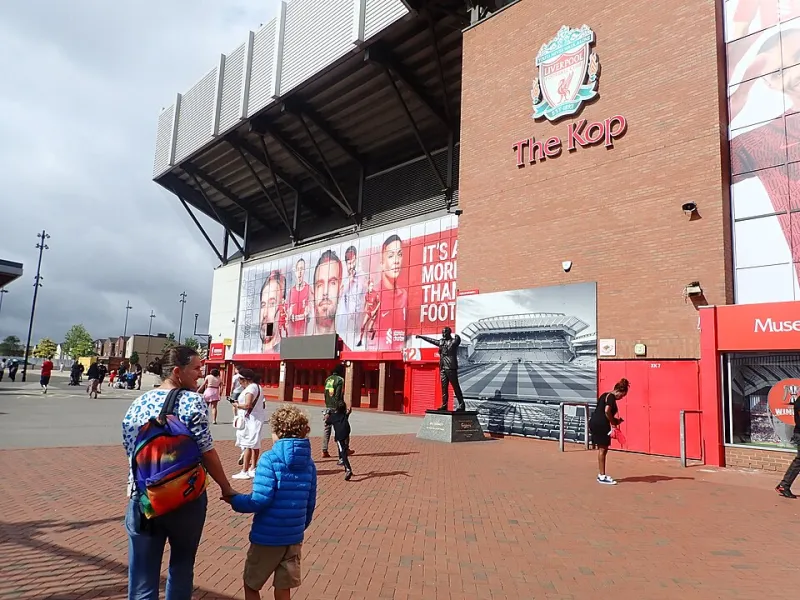
Photo: Samson Ssemakadde, CC0, via Wikimedia Commons
There's a moment every matchday director knows. Two teams walk out of the tunnel, one in red, one in anything else, and the colour balance of the entire broadcast shifts. The red side looks louder. Closer. More there. It's not imagination — it's physics, psychology and a hundred years of telly history all rolled into one shirt.
A Colour With a Geography
Ask a Liverpudlian what red means and you'll get an answer soaked in Shankly quotes and European nights. Ask in Nottingham and you're talking European Cup history that still winds up the red half of Merseyside. Barnsley, Charlton, Middlesbrough, Aberdeen — each red carries its own accent, its own grievances, its own mythology.
What's fascinating is how rarely we acknowledge the common thread. Red is the most contested colour in British football and simultaneously the most shared. Roughly a fifth of Football League clubs wear it as their primary colour, and that concentration isn't accidental. Red dyes were cheap and bold in the early game. Red reads at distance on a pitch, in a stand, on a grainy黑白 telly — sorry, black and white telly, though for decades it didn't matter, because red was always the colour you imagined.
Why the Camera Loves It
Broadcast engineers will tell you red sits at the edge of what early colour television could render faithfully. It bled. It glowed. It dominated a frame in a way that beige and claret simply couldn't. That technical quirk became an aesthetic: red shirts seemed to move on screen, to carry energy even when the football didn't.
Then Sky arrived and made red the house colour of the entire Premier League era. The graphics, the bottom-left corner badge, the breaking-news banner — a generation of fans learned that football on telly is red. When a red-shirted team scores, the whole broadcast palette harmonises. It's why clips of red sides scoring feel more vivid in memory, even to neutral viewers. The frame was always leaning that way.
The Rewatch Countdown
So which red moments live rent-free in the nation's collective memory? Our picks:
5. Barnsley's giant-killings — when the underdogs in red dump a giant out of a cup, the clip ages like wine.
4. Aberdeen ending the Old Firm monopoly — a red tide in Scotland that proved the decade belonged to Pittodrie.
3. Forest's back-to-back European Cups — plain shirt, huge history, endlessly replayed on nostalgia nights.
2. United's injury-time rescue in Barcelona, 1999 — the red shirts peeling away in celebration is arguably the most reproduced still image in English football broadcasting.
1. Istanbul, 2005 — a red half of a stadium, a red comeback, and a commentary call that half the country can recite. No clip better captures why the camera and the colour found each other.
One Colour, Many Meanings
Here's the thing: the shared colour doesn't flatten the differences — it sharpens them. Every red shirt on screen is a Rorschach test. What you see depends on where you're standing, and which red yours is.
That's the quiet genius of football's visual culture. One colour, dozens of dialects, and a telly archive that keeps proving the camera agrees with all of them.