Tears Before Kick-Off: Inside the Slow-Motion Machine That Gets You Every Single Time
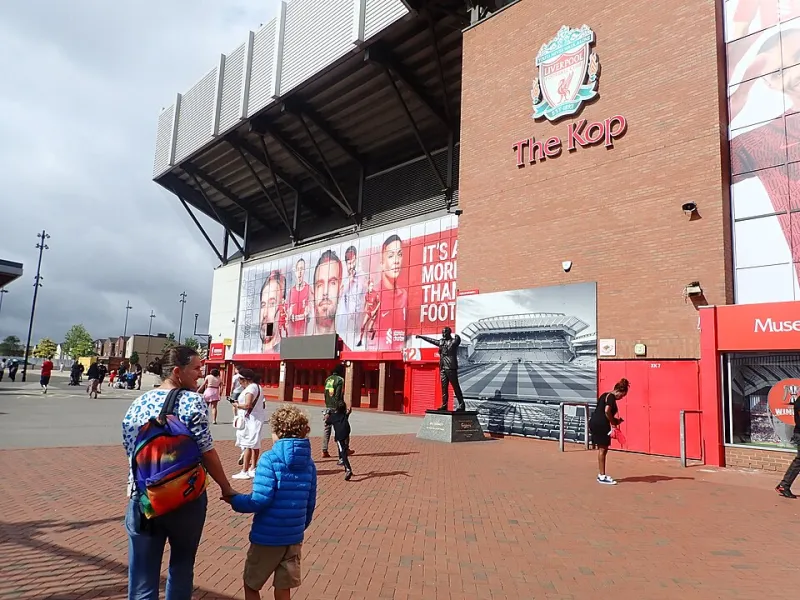
Photo: Steve Daniels, CC BY-SA 2.0, via Wikimedia Commons
There's a moment, roughly forty minutes before kick-off on a Saturday evening, when the broadcast stops being a broadcast and becomes a film. The players emerge from the tunnel in glorious slow motion. Rain hangs in the floodlights like glitter. A child in an oversized scarf gazes up at the stands as though the ground itself is a cathedral. The strings swell. And somewhere on a sofa in Bootle, a grown adult in a Kenny Dalglish shirt quietly gets a lump in their throat.
We've all been there. The matchday montage is football telly's emotional shortcut — five seconds of slowed-down footage doing the work of ninety minutes of narration. But where did it come from, who's actually making these things, and is it art or just very sophisticated tugging of the heartstrings?
From Grains of Film to Grainy Nostalgia
The roots go back further than you'd think. In the 1980s, Football Focus and Match of the Day producers began experimenting with pre-title packages — short bursts of set-to-music footage designed to make you sit up and stop making tea. The technique was born of necessity as much as artistry. With limited editing kit, editors would slow tape down slightly, cut to the beat, and hope for the best.
What they stumbled into was alchemy. Slow motion has a peculiar power over the human brain: it signals that what we're watching matters. Sport, by its nature, is chaos at full speed. Slow it down, add a minor key, and suddenly a routine warm-up looks like destiny unfolding.
By the 1990s and the Sky revolution, the montage had matured into a full-blown ritual. Think of the Premier League opening titles, the Champions League anthem paired with sweeping aerial shots, or the legendary title-decider packages that treated a league table like a Greek tragedy.
The Craft Behind the Tears
Speaking to editors who work on modern packages — many of whom asked to keep their clubs anonymous, given how closely guarded these techniques are — a fascinating picture emerges. The montage isn't just slow-mo and sad piano. It's a science.
"You're hunting for what we call 'the look'," one editor told us. "A player glancing at the crowd. A fan mid-roar. The kid. There's always a kid. Find the kid and you've got your emotional anchor."
The music, meanwhile, is chosen with surgical precision. Swelling strings for heritage and gravitas. Pulsing electronica for derby days. And increasingly, complete silence — a beat of dead air before the commentary kicks in, because nothing makes an ear sit up like its sudden absence.
The rain, incidentally, is not a coincidence. Editors openly admit that wet-weather footage is gold. Rain in slow motion catches the light, adds texture, and — crucially — makes everything look like a memory, even if it was filmed that morning.
Manipulation? Mate, We Signed Up For It
Here's where it gets spicy. Scroll through social media after any big montage drops and you'll find two camps warring it out. One posts crying emojis and "who's cutting onions". The other cries foul, insisting they're being emotionally strong-armed by broadcasters with a strings budget.
There's merit to both. Yes, these packages are engineered to provoke. But so is a chorus, so is a last-minute winner, so is football itself. The montage doesn't manufacture emotion out of nothing — it distils it. That kid in the scarf? Real. The roar in the stands? Real. The edit just holds a mirror up at the right angle.
The counter-argument is that the montage flattens everything into the same feeling. Every match becomes epic, every derby a holy war, every rainy Tuesday in November a scene from a war film. When everything is painted in gold, nothing shines.
The Fan Era: Montages Go Grassroots
What's changed most in recent years is who's holding the scissors. Fan channels and independent creators — the very people Reds TV exists to champion — have taken the montage and run with it, often out-crafting the broadcasters at their own game. A well-cut tribute to a departing legend can rack up more views than the official package, made on a laptop in a spare room in Kirkby.
And here's the beautiful irony: the broadcasters are now learning from the fans. The raw, slightly rough-edged fan edit — all imperfection and heart — has become the gold standard, precisely because it feels honest in a way the polished broadcast package sometimes doesn't.
So, Art or Manipulation?
Honestly? It's both, and that's fine. The matchday montage is craft — genuine, skilled, painstaking craft — in service of something we all voluntarily signed up for: loving a football club. If five seconds of slow motion and a well-timed string section can make a grown Scouser well up before a ball's been kicked, that's not a con. That's the whole point.\n Now if you'll excuse us, someone's put that tunnel-cam clip to a piano cover again, and we've something in our eye.