Ninety Seconds of Glory: The Hidden Hands Crafting the Goals You'll Never Forget

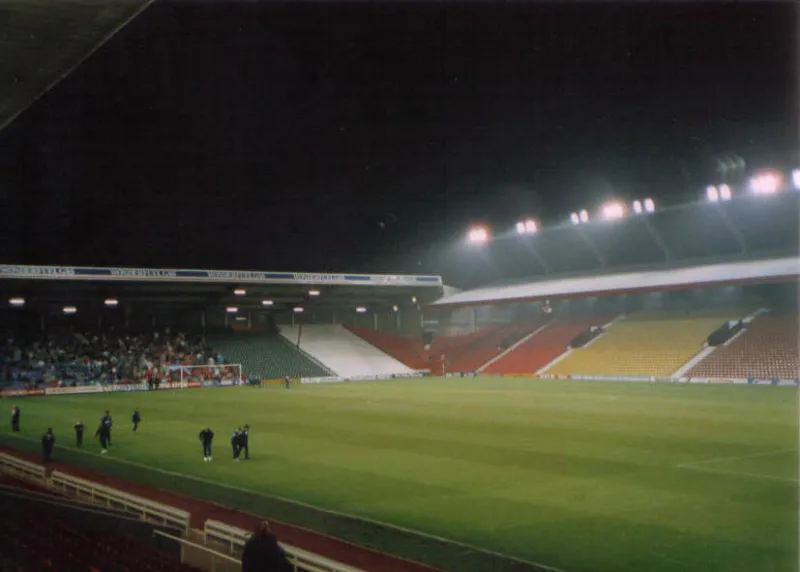
Photo: w:User:Coolcaesar, CC BY-SA 3.0, via Wikimedia Commons
Somewhere in a darkened edit suite at 10:40pm on a Saturday night, someone is watching the same four-second clip for the fifteenth time. Frame by frame. Slow it down. Check the reaction. Does the camera catch the celebration? Is the ball actually over the line when the net ripples?
That person — a video editor you will never know the name of — is currently deciding what hundreds of thousands of supporters will remember about tonight's match. Not what happened. What gets remembered. And increasingly, those are two very different things.
The 90-Minute Problem
A full match is a sprawling, messy thing. Two hours of broadcast, thousands of individual moments, most of them forgettable even to the die-hards. But the modern fan doesn't consume football that way anymore. They consume it in clips — a 45-second cut on the club's social channels, a highlight package on the app, a loop of the winning goal doing the rounds on group chats before the final whistle has even settled.
Someone has to make the cut. Literally.
"People assume the best moments just speak for themselves," one former Premier League club media editor tells us. "They don't. A goal is ten seconds of action surrounded by ninety seconds of build-up, camera cuts, replays of nothing. Your job is to find the emotional core of it and get there fast. If you haven't hooked someone in the first three seconds, they've scrolled past."
Three seconds. That's the window. Ninety minutes of football, judged by whether it can arrest a thumb mid-scroll.
The Choices Nobody Notices
Here's where it gets interesting. Every edit is a series of decisions, and every decision carries a point of view.
Do you open the highlight package with the goal itself, or with the passage of play that built it? Do you show the celebration from the stands — the raw fan reaction — or keep it tight on the players? Do you include the manager's touchline response, the substitution that changed the game, the moment the away end went quiet?
"You're essentially writing a story without words," the same editor explains. "And the story you tell becomes the story fans tell each other. If your cut frames it as a smash-and-grab, that's how it gets discussed. If you frame it as a tactical masterclass, same thing. The edit is the narrative."
Club media teams are acutely aware of this power. There's a reason rival clubs' highlight packages often feel strangely flat when your team loses — the edits are honest, technically, but the emphasis is a choice. The 50/50 tackle your player won gets shown; the one your player lost doesn't. Nobody's lying. Everybody's curating.
When the Memory Diverges From the Match
Ask any supporter about a famous game and they'll describe it in highlights. The shot from the edge of the box. The corner swung in. The knee slide. But the actual experience of watching that match live — the tedium, the half-chances, the queue for the loo at half-time — that evaporates. What survives is the cut.
And that's the quiet tension at the heart of modern football memory. The gap between what happened and what gets kept.
An ex-broadcaster we spoke to put it bluntly: "Twenty years ago, the memory of a match was communal — you remembered it with your mates and the memory drifted and mutated. Now the memory is a file. It's fixed. And whoever made that file decided what your nostalgia looks like."
There's something slightly eerie about that. The goals your kids will grow up watching on repeat — the ones that become "legendary" — were chosen by an editor with a deadline, working from a highlights checklist, probably eating a meal deal at their desk.
The New Gatekeepers
What's changed most in the last five years is who holds the scissors. It used to be broadcasters exclusively. Now every club runs what is essentially an in-house production company: multi-camera coverage, dedicated social editors, overnight turnarounds for extended highlights.
And the fan media space — the channels and creators Reds TV exists alongside — has added another layer entirely. Independent editors cutting their own versions of the same night, each with a different eye, a different emphasis, a different vibe. The same goal, five different memories.
Some editors lean cinematic: long lenses, slow motion, a needle-drop of music. Others go raw: crowd noise up, commentary down, let the stadium do the talking. Neither is wrong. Both are choices. Both shape the record.
The Unsung Craft
So next time a clip drops and your group chat erupts, spare a thought for the person in the dark. The one who watched the whole match twice, who knew exactly which angle had the cleanest look at the strike, who trimmed the celebration so it peaked just as the clip ended.
They won't get a medal. Their name won't trend. But decades from now, when that goal is replayed as part of some anniversary montage, it'll be their version you see.
Immortality, it turns out, is mostly a timeline decision made under pressure at 10pm on a Saturday.